Swimming in Lake Lucerne: Lidos, Free Beaches, Water Quality and Safety
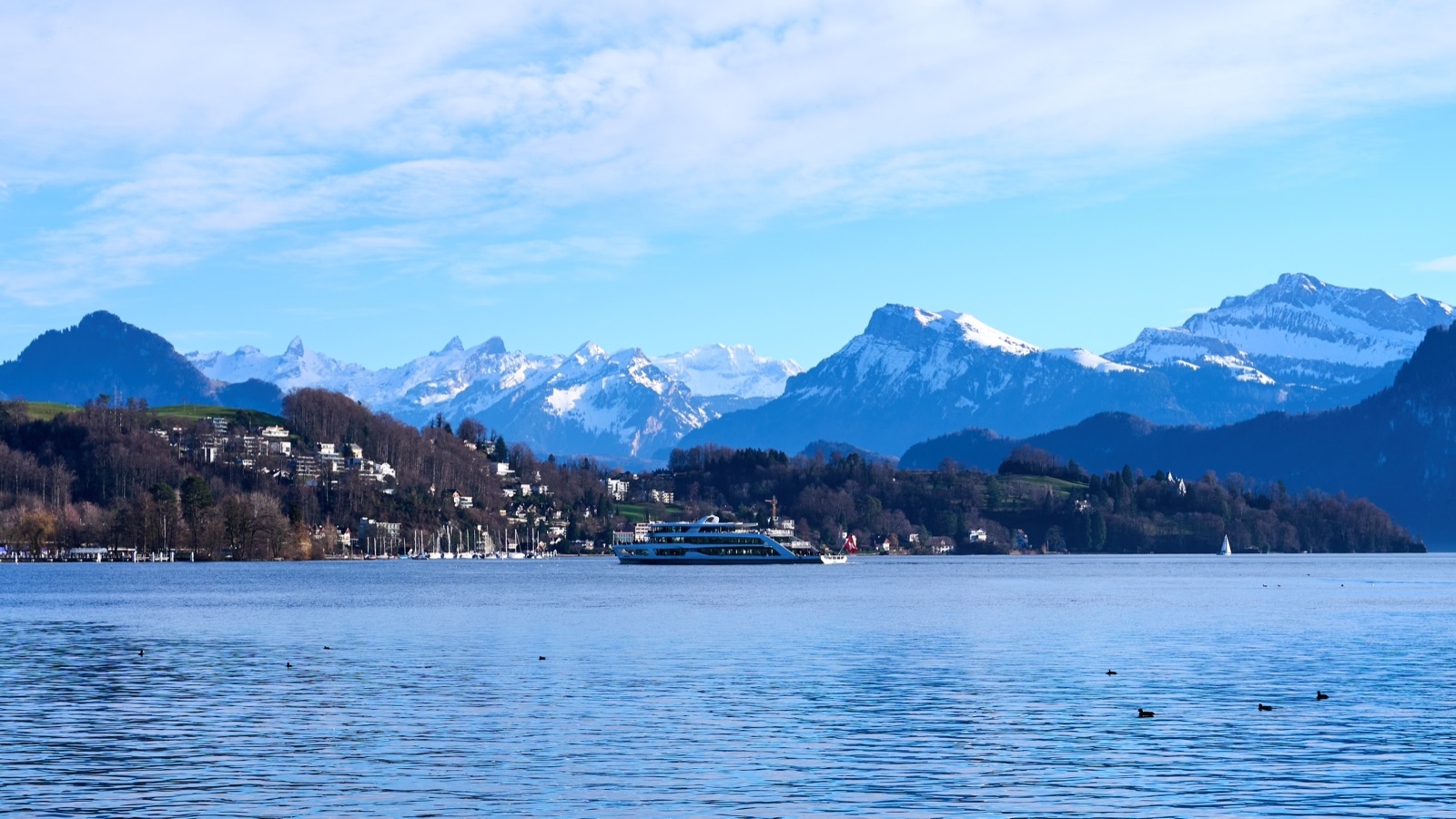
Yes, you can swim in Lake Lucerne, and in summer many people do. The water is clean and clear: the canton says the lake’s nutrient levels have settled at a low level, algae growth is low, and the lake is even used for drinking water. In the city, the three favourite places are Lido Luzern, with a 300-metre sandy beach and a heated pool, the historic Seebad Luzern in the centre, and Ufschötti, a free beach a few minutes’ walk from the station. Around the lake there are lidos in most villages, from Weggis and Vitznau to Beckenried and Brunnen.
This guide covers where to swim, when the season runs, what it costs, how clean and cold the water is, and the safety rules that matter on a big alpine lake with boats and sudden wind.
Swimming at a glance
| Place | Type | Cost | Notes |
|---|---|---|---|
| Lido Luzern | Lido with sandy beach and heated pool | Paid | 300 m beach, 25 m heated pool, next to the Swiss Museum of Transport |
| Seebad Luzern | Historic wooden lake bath in the centre | Adults CHF 6 | Open into the evening in summer; closed in cool or wet weather |
| Ufschötti | Free park beach | Free | Almost 200 m of sand, a few minutes from the station |
| Vitznau Kurpark | Free lakeside park | Free | Swim and lie on the lawn by the boat landing |
| Weggis lido | Village lido | Free with the local guest card | Overnight guests get free admission |
| Beckenried | Village lido and bathing beach | See the lido | Southern shore, by the boat landing |
| Brunnen (Hopfräben) | Village lido | See the lido | Gateway to Lake Uri |
Is the water clean?
It is. According to the canton of Lucerne, the expansion of waste-water treatment has brought the lake’s phosphorus level down to a low, stable value of about 5 mg per cubic metre. As a result, algae growth is low, the oxygen supply is good and the water is clear. Because of its good quality, the lake is also used as a drinking-water source, including by the city of Lucerne.
Lake Lucerne is also large and deep: 114 km², with a maximum depth of 214 metres in the Gersau basin, and divided into seven basins, each with its own character. That depth is one reason the water stays cool even in summer.
How cold is it?
Cooler than many people expect. The lake is fed by mountain rivers and is very deep, so even in July and August the first plunge is bracing. Water temperature varies a great deal by basin, weather and depth, and from day to day. For current readings, the federal hydrology service publishes live water temperatures at its measuring stations, so check before you go if you are sensitive to cold.
When the lake is too cool for you, Lido Luzern has a heated 25-metre pool for just those days.
Lido Luzern
The Lido Luzern is the city’s big lakeside lido, directly next to the Swiss Museum of Transport. It has:
- A 300-metre sandy beach with views of Pilatus, the Bürgenstock, the Stanserhorn and the city.
- A heated 25-metre pool for days when the lake is cool.
- Lawns, a paddling pool, a fountain and a waterfall for children, and a large playground.
- Six beach volleyball pitches.
- SUP board rental, a restaurant, toilets, showers and changing cubicles.
Getting there: from Lucerne station, take bus 6, 8 or 24 to the Verkehrshaus - Würzenbach stop, or the S3 train to Verkehrshaus. By car or bike, follow the signs to the Verkehrshaus.
Opening: the opening hours depend on the weather. On days of doubtful weather, the lido posts whether it is open on its website from about 8am, and hours can be restricted for technical, safety or weather reasons or for special events.
Combine it with the museum next door for a full family day.
Seebad Luzern
The Seebad Luzern is a historic wooden lake bath on the Nationalquai, right in the city. It keeps the charm of the Gründerzeit, the era of its wooden architecture, with simple changing rooms around two inner courtyards and two pools in the centre of the wooden structure, plus open-water swimming on the lake side, with a view of Pilatus and the KKL.
Practical details:
- Hours: in summer you can swim until 8pm, then stay for the sunset at the restaurant or bar. In May and September there are adjusted opening hours.
- Weather: it closes in cool temperatures, rain or storms.
- Prices: adults CHF 6; youths aged 6-15 CHF 4; lunchtime admission (Monday to Friday, 12 to 14 h) and evening admission (from 18 h) CHF 4.
- Facilities: lockers, deckchairs, a sun canopy, a restaurant, a bar and toilets.
It is the most atmospheric swim in Lucerne, and the easiest to fit into a city day.
Ufschötti: the free city beach
Ufschötti is a park on the lakeshore with an almost 200-metre sandy beach, and the place to go in Lucerne to swim for free. It is only a few minutes’ walk from the main station.
- Hours: in summer the bathing areas are open from 8am to 10pm.
- Season: the facility is closed from the beginning of November until Easter.
- Atmosphere: relaxed and local, with picnics on the grass and swimmers heading out from the beach.
On hot weekends it is busy; arrive early or come in the evening.
Swimming around the lake
Lucerne’s tourist board lists lidos and bathing places all around the lake, including:
- Hergiswil lido, on the shore towards Pilatus.
- Stansstad lido and the General Guisan Quay bathing area in Stansstad.
- Buochs-Ennetbürgen lido and the Neuseeland bathing place in Buochs.
- Beckenried lido, on the southern shore, by the boat landing.
- Hopfräben lido in Brunnen, at the entrance to Lake Uri.
- Seedorf lido, at the southern end of Lake Uri.
- The Seelisberger Seeli, a small natural swimming lake above Lake Uri.
On the Rigi shore:
- Weggis. Overnight guests receive the Visitor Card Weggis Vitznau Rigi, which includes free admission to the lido.
- Vitznau. In the freely accessible Kurpark next to the boat landing you can swim and relax on the lawn.
Many of these are reached by boat, which makes a swim an easy part of a day on the water: sail to a village, swim, eat by the lake and take a later boat back. The boats and tickets guide has the sailing times.
Swimming on Lake Uri
The southern arm of the lake, Lake Uri, is a different kind of water. Between Brunnen and Flüelen it has a fjord-like landscape with steep shores, so there are fewer natural beaches and the bathing places are concentrated where the land flattens out: the Hopfräben lido in Brunnen at the northern end, and the Seedorf lido near the Reuss delta at the southern end, where the landscape opens up around Flüelen.
Lake Uri is also the home of the foehn, the warm south wind. In Brunnen, the Föhnhafen boat station exists to shelter ships from its eddies and high waves. On a foehn day the water can turn rough quickly, so check the storm lights and the forecast before swimming or paddling there.
Mountain lakes and other waters nearby
If you are spending the day in the mountains, there are a few smaller waters for a dip or a paddle:
- The Seelisberger Seeli, a natural swimming lake on the terrace above Lake Uri, reached from the Rütli side of the lake.
- The Stoos-Seeli, a small lake by the car-free village of Stoos, where water fun is one of the summer activities.
- The Trübsee, at the halfway station of Titlis, where rowing is free of charge, with a voluntary contribution towards costs.
Lucerne’s tourist board also lists lidos on the other lakes of the region, such as Lake Hallwil and Lake Baldegg in the Seetal valley and Lake Sempach at Eich and Nottwil. They are quieter alternatives on a hot weekend, though not on Lake Lucerne itself.
Warm water instead: the spa option
On a day when the lake is too cold, the Mineralbad & Spa Rigi Kaltbad, designed by the architect Mario Botta, offers bathing in water heated to 35°C with a mountain view. It is reached by the cable car from Weggis or the cogwheel railway from Vitznau, and it combines well with a morning on the Rigi. Many of the wellness hotels in Weggis also offer spa access to day guests.
When is the swimming season?
The outdoor season runs roughly from late spring to early autumn, and almost every bathing place depends on the weather. Lidos open on fine days and close in cool, wet or stormy weather; Ufschötti is closed from November until Easter; the Seebad has adjusted hours in May and September. For the warmest water, aim for July, August and early September; the best time to visit guide covers the seasons in detail.
Safety: the bathing rules
The Swiss Lifesaving Society (SLRG) publishes six bathing rules, and they are worth knowing before you swim in an alpine lake:
- Supervise children. Small children should only go to the water accompanied, and within arm’s reach. The SLRG warns that a small child can drown in shallow water in less than 20 seconds, usually silently. Armbands and inflatable toys never replace supervision.
- No alcohol or drugs, and not on a full or completely empty stomach.
- Never jump in overheated. The shock of cold water can cause cramps or worse. Cool off with a shower first or wade in slowly, wetting your arms, face and upper body before going under.
- Do not jump into murky or unknown water. Shallow water, rocks and branches are not always visible from the shore.
- Airbeds and inflatables do not belong in deep water. They are hard to steer and can drift far from the shore.
- Never swim long distances alone. For open-water swimmers training alone, the SLRG recommends a tow buoy or rescue belt.
Boats, wind and storm lights
Lake Lucerne is a busy waterway, and two things set it apart from a pool:
- Boats. Scheduled ships, private boats and paddleboards share the lake. Keep away from boat landings and the routes of the big ships, and swim within the marked areas at the lidos.
- Wind. The weather can change quickly. On Swiss lakes, orange warning lights on the shore flashing about 40 times a minute mean a strong-wind warning, with gusts of 46 to 61 km/h expected; about 90 times a minute means a storm warning. If the lights are flashing, get out of the water and off the lake. MeteoSwiss forecasts the winds and issues the warnings, and the cantonal police switch the lights on.
Paddleboards, pedalos and other ways onto the water
Swimming is not the only way to get into the lake. Lido Luzern rents SUP boards, and in warmer weather you can explore the lake from the city by pedalo and end the day with a swim. The same rules apply on a board as in the water: watch the storm lights and stay clear of the big ships.
With children
For families, the easiest choices are the lidos with shallow areas and facilities. Lido Luzern is the best equipped, with its heated pool, paddling pool, fountain and playground, and the Swiss Museum of Transport next door. Ufschötti’s sandy beach is popular with families too, and in the villages, Weggis, Vitznau and Beckenried all have places to swim close to the boat landing. Keep small children within arm’s reach, whatever their armbands.
What to bring
- A swimsuit and a towel, and a bag that can get wet if you travel by boat.
- Sun protection and a hat. The sun is strong at the lake, and reflected light adds to it.
- Water shoes for stony entries outside the sandy beaches.
- Money or a card for the paid lidos and their restaurants.
- A warm layer for after the swim; the evening breeze off the water can be cool.
- Something to eat if you plan a long afternoon at Ufschötti or the Kurpark in Vitznau.
A swim as part of a day on the lake
Some ideas for combining a swim with the rest of a lake day:
- City day: morning in the old town, an afternoon swim at the Seebad, and sunset on its terrace.
- Family day: the Swiss Museum of Transport in the morning, Lido Luzern in the afternoon.
- Boat day: a scheduled boat to Vitznau or Weggis, a swim, lunch by the water and the boat back; the one-day planning guide has more combinations.
- Mountain day: Rigi in the morning, then a cooling swim in Vitznau on the way back.
Prefer to stay dry? A cruise from our tours page shows you the same shores from the deck.
Mistakes to avoid
- Jumping straight in on a hot day. The water is cool; cool down first.
- Swimming out alone. Swim with someone, or take a tow buoy.
- Ignoring the storm lights. Flashing orange lights on the shore mean get out.
- Assuming the lido is open. Most open only in good weather; check in the morning.
- Swimming near the piers. Keep away from boat landings and shipping routes.
Frequently asked questions
Can you swim in Lake Lucerne? Yes. The water is clean and clear, and there are lidos and bathing places in Lucerne and around the lake.
Where can I swim for free in Lucerne? At Ufschötti, a park with an almost 200-metre sandy beach a few minutes’ walk from the station. In Vitznau, the Kurpark by the boat landing is freely accessible.
How much does the Seebad Luzern cost? Adults CHF 6 and youths aged 6-15 CHF 4, with reduced lunchtime and evening admission at CHF 4.
Is Lake Lucerne cold? Yes, cooler than many people expect, even in summer. Lido Luzern has a heated 25-metre pool for cool days.
Is it safe to swim in Lake Lucerne? It is, if you follow the bathing rules: supervise children, never swim long distances alone, cool down before going in and leave the water when the orange storm lights flash.
Where can I swim near the Rigi? In Vitznau’s Kurpark by the boat landing, or at the Weggis lido, which is free for overnight guests with the Visitor Card Weggis Vitznau Rigi. For warm water, the Mineralbad & Spa at Rigi Kaltbad is heated to 35°C.